
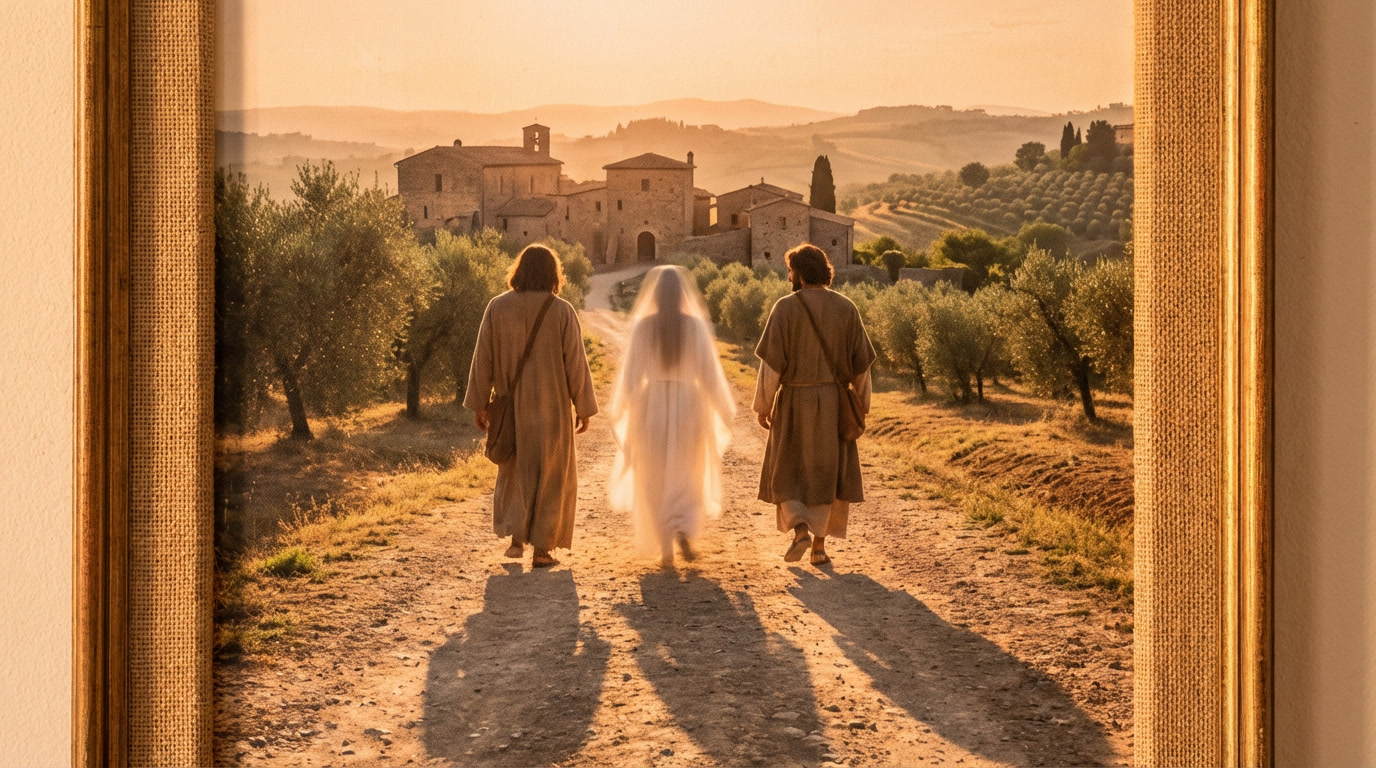
That very day, the first day of the week, two of Jesus' disciples were going to a village seven miles from Jerusalem called Emmaus, and they were conversing about all the things that had occurred. And it happened that while they were conversing and debating, Jesus himself drew near and walked with them, but their eyes were prevented from recognizing him.— Luke 24:13-16
The road to Emmaus speaks to every season of spiritual dryness, every moment when Christ feels absent despite His constant presence. These disciples carry their disappointment like stones in their sandals, each step away from Jerusalem a step deeper into confusion.
When Eyes Are Prevented From Seeing
Scripture tells us their eyes were "prevented" from recognizing Jesus. This passive voice suggests divine purpose in their temporary blindness. Sometimes the Lord conceals Himself not from cruelty, but from mercy—to teach us to recognize Him in new ways.
Cleopas and his companion expected a political Messiah, a revolutionary who would restore Israel's earthly kingdom. Their vision remained trapped in human categories. The crucified and risen Christ defied their understanding entirely.
Saint Augustine observed that the disciples' hearts needed to burn before their eyes could see. Recognition comes not through sight alone, but through the slow kindling of faith that happens when Scripture meets the soul prepared to receive it.
The Stranger Who Knows Our Story
Jesus asks what troubles them, though He knows their hearts completely. This question invites confession—not for His benefit, but for theirs. Speaking our disappointments aloud begins the healing process.
"We were hoping," they tell Him. Past tense hope reveals their spiritual state more clearly than any theological explanation could. Hope deferred makes the heart sick, as Proverbs teaches, yet these disciples cannot abandon hope entirely. They still speak of it, even in past tense.
The women's testimony about the empty tomb perplexes them. They want to believe but cannot reconcile resurrection with their grief. Faith and doubt wrestle within them as they walk.
Scripture Interpreted by Scripture Himself
Jesus responds to their confusion with Scripture, beginning with Moses and moving through all the prophets. The Word made flesh explains the written word. This represents the perfect model for understanding Scripture—Christ Himself as the interpretive key.
He calls them "foolish" and "slow of heart," yet continues walking with them. His correction comes wrapped in patient companionship. The harshest truths become bearable when spoken by Love Himself.
Their hearts burn within them as He speaks, though they do not yet understand why. The Word of God always carries this power—to ignite something in the soul even before the mind fully grasps the meaning. This inner burning serves as a sign of authentic encounter with divine truth.
Recognition in the Breaking of Bread
Only in the Eucharistic gesture do their eyes open. Jesus takes bread, blesses it, breaks it, and gives it to them. These same four actions—take, bless, break, give—marked the Last Supper and continue in every Mass.
Recognition comes through sacrament, not through argument or explanation. The Eucharist reveals what words alone cannot convey. In this moment, they understand that Christ's presence never depends on their ability to perceive it.
He vanishes from their sight precisely when they recognize Him. The physical presence gives way to sacramental presence. They must learn to find Him in the breaking of bread rather than in visible form.
Pray With This Reading
This Gospel passage invites Ignatian Contemplation, placing yourself on that dusty road with the disciples. Feel their disappointment, hear their questions, experience the moment of recognition. Allow Christ to walk beside you in your own confusion and doubt.
Frequently Asked Questions
Why didn't the disciples recognize Jesus on the road to Emmaus?
Scripture indicates their eyes were "prevented" from recognizing Him, suggesting divine purpose. Their expectations of a political Messiah blinded them to the true nature of Christ's resurrection. Recognition required a change of heart, not just sight.
What does the burning hearts experience mean?
The disciples' burning hearts represent the authentic response to God's word when properly understood. This inner fire serves as a sign of true encounter with Christ through Scripture, preceding and preparing for full recognition.
Why is the breaking of bread significant in this story?
The breaking of bread reveals Christ's presence through sacramental action rather than physical appearance. This Eucharistic gesture connects the Emmaus story to the ongoing liturgical life of the Church, where Christ becomes present in the same way.