
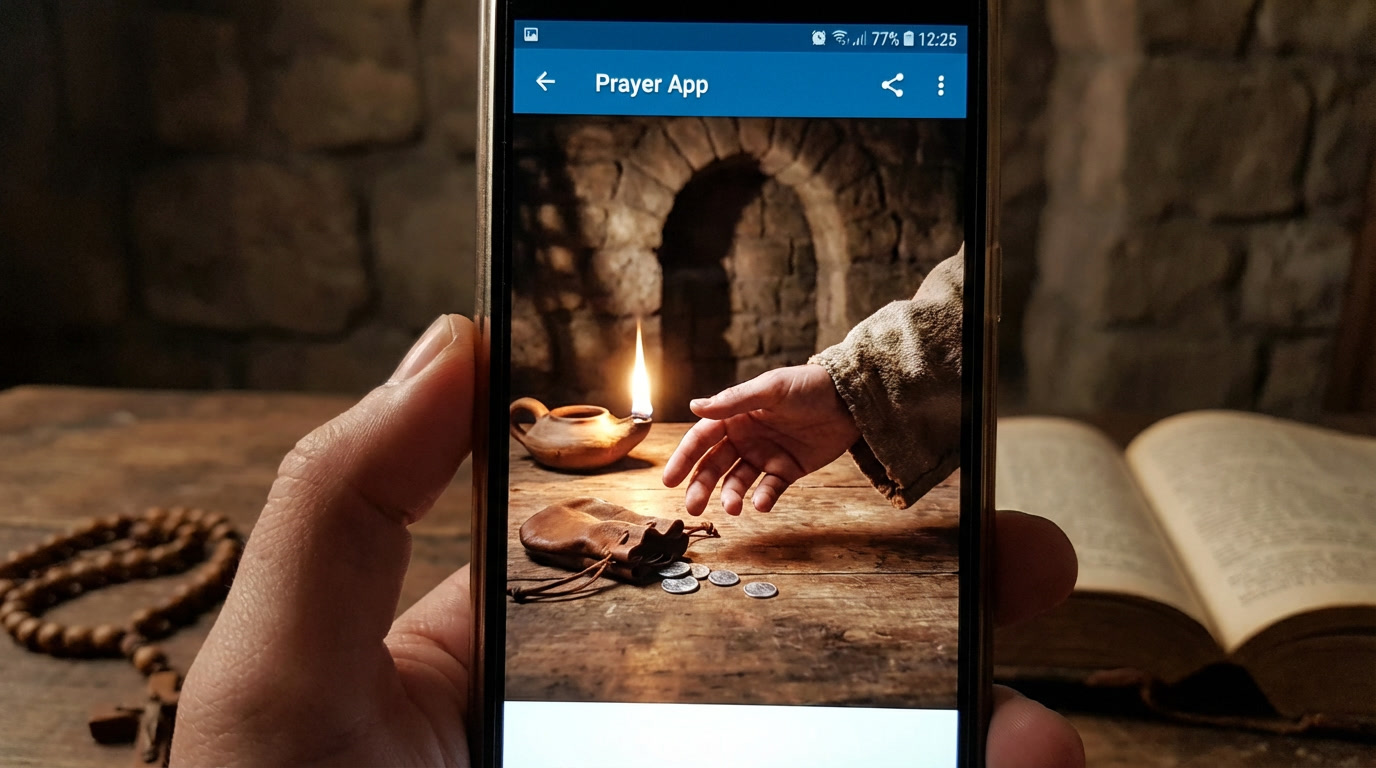
One of the Twelve, who was called Judas Iscariot, went to the chief priests and said, "What are you willing to give me if I hand him over to you?" They paid him thirty pieces of silver, and from that time on he looked for an opportunity to hand him over... "Amen, I say to you, one of you will betray me." Deeply distressed at this, they began to say to him one after another, "Surely it is not I, Lord?"— Matthew 26:14-25
The betrayal of Jesus begins not with a dramatic confrontation, but with a quiet transaction. Judas Iscariot approaches the chief priests with a question that reveals the state of his heart: "What are you willing to give me?" This Wednesday of Holy Week confronts us with the sobering reality that betrayal often grows in silence, nurtured by small compromises and hidden grievances.
The Price of Betrayal
Thirty pieces of silver. The amount seems almost insulting—the price of a slave according to Exodus 21:32. Yet Judas accepts this sum, reducing the Son of God to a commodity. The tragedy lies not merely in the betrayal itself, but in how Judas had likely been preparing for this moment through countless smaller acts of infidelity.
Saint John Chrysostom observes that Judas had been stealing from the common purse, his heart gradually hardening through these secret sins. The betrayal in the garden was simply the culmination of a soul that had been betraying Christ in hidden ways for months. This passage calls each of us to examine the small compromises that can lead to greater falls.
The Lord's Appointed Time
Even as betrayal unfolds, Jesus moves forward with deliberate purpose. "My appointed time draws near," He tells His disciples. The Greek word "kairos" suggests not merely chronological time, but the divinely appointed moment when God's plan reaches its fulfillment.
Christ's sovereignty over these events offers profound comfort. The betrayal, though genuinely evil in Judas' heart, becomes part of God's redemptive plan. This does not excuse Judas' sin, but it reveals how God can bring good even from the worst human actions. The Cross, humanity's greatest crime, becomes our salvation.
Surely It Is Not I, Lord?
When Jesus announces the coming betrayal, eleven disciples respond with anxious self-examination: "Surely it is not I, Lord?" Their question reveals both humility and fear. They know their own weakness well enough to wonder if they might be capable of such a thing.
This moment of collective soul-searching models healthy spiritual practice. Rather than immediately pointing fingers at others, the disciples turn inward. Saint Augustine reminds us that we should always be more concerned with the sin in our own hearts than with the failings of others. Ignatian contemplation can help us enter this scene and examine our own capacity for betrayal.
The Betrayer's Different Question
Notice the subtle but crucial difference in Judas' response. While the other disciples ask, "Surely it is not I, Lord?", Judas asks, "Surely it is not I, Rabbi?" He uses "Rabbi" rather than "Lord," revealing that he has never truly surrendered to Jesus' authority. Even in this moment, his hardened heart cannot acknowledge Christ's divinity.
Jesus' response—"You have said so"—demonstrates both His knowledge of human hearts and His respect for human freedom. He does not force Judas to confess, but allows him to reveal himself through his own words and actions.
Pray With This Reading
This Gospel passage invites deep examination of conscience, making it particularly suited for lectio divina. Spend time with the disciples' question: "Surely it is not I, Lord?" Allow this question to search your own heart during this holy week.
Frequently Asked Questions
Why did Jesus allow Judas to betray Him?
Jesus respected Judas' free will while using even this betrayal to accomplish salvation. God can bring good from evil without removing human responsibility for sin. Jesus knew what Judas would do but did not force his choice.
What does the thirty pieces of silver represent?
According to Exodus 21:32, thirty shekels was the price paid for a slave who had been killed. This amount emphasizes the insulting cheapness at which Judas valued his Master, fulfilling Zechariah's prophecy (Zechariah 11:12-13).
How should Catholics examine their conscience during Holy Week?
Like the disciples, ask "Is it I, Lord?" rather than focusing on others' sins. Examine areas where small compromises might lead to larger betrayals. Consider what "price" might tempt you away from faithfulness to Christ.