
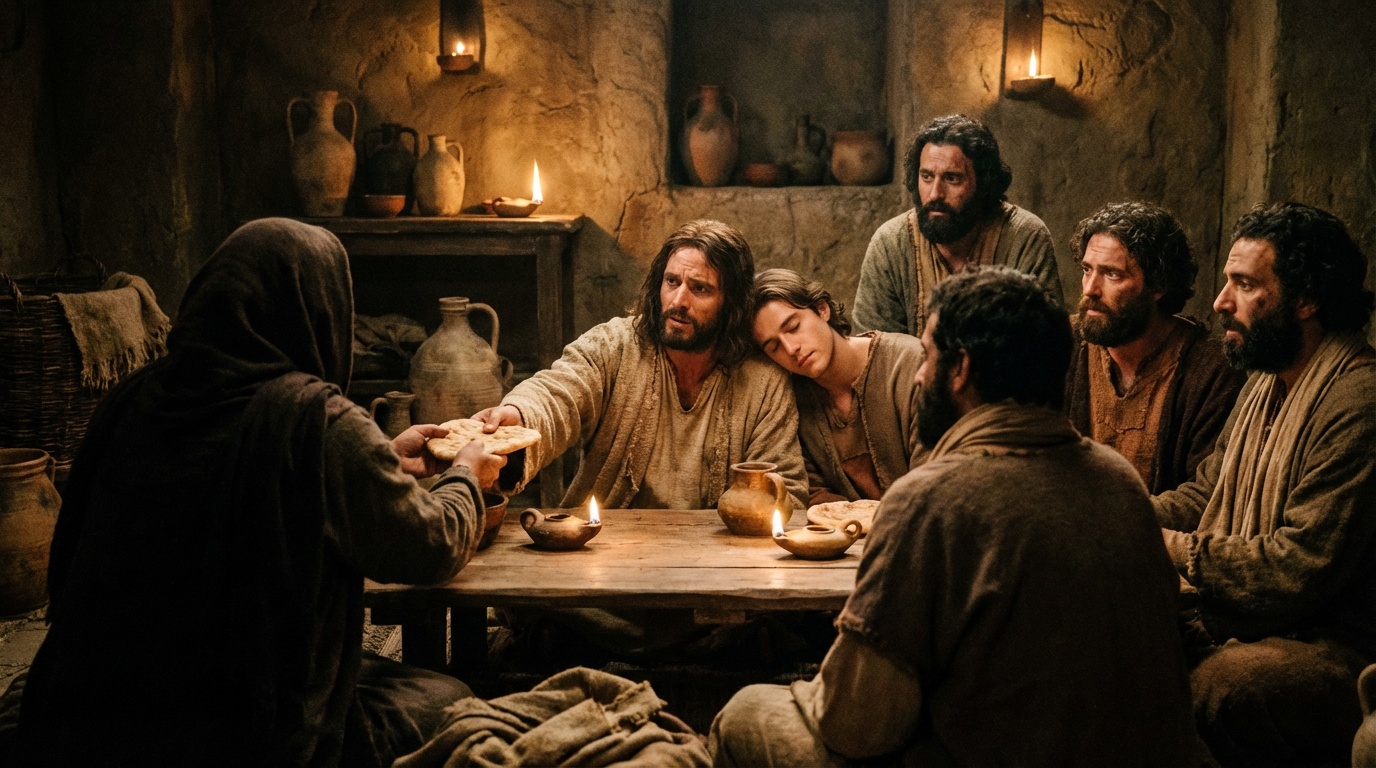
"Reclining at table with his disciples, Jesus was deeply troubled and testified, 'Amen, amen, I say to you, one of you will betray me.' The disciples looked at one another, at a loss as to whom he meant... After Judas took the morsel, Satan entered him. So Jesus said to him, 'What you are going to do, do quickly.'" — John 13:21-33, 36-38
The intimacy of the Last Supper becomes the stage for humanity's greatest betrayal. Christ reveals that even within the circle of chosen disciples, darkness can take root. This Gospel passage from John 13:21-33, 36-38 shows how Jesus faces betrayal with sovereign knowledge and transformative grace.
The Trouble in Christ's Heart
Scripture tells us Jesus was "deeply troubled" as he announced the coming betrayal. The Greek word here suggests an inner turmoil that shook his very soul. Even the Son of God experiences the weight of human treachery.
This divine anguish reveals something profound about the Incarnation. Christ enters fully into human suffering, including the particular agony of betrayal by a friend. Psalm 41 echoes through this moment: "Even my bosom friend in whom I trusted, who ate of my bread, has lifted his heel against me."
The disciples' confusion mirrors our own bewilderment when evil emerges from unexpected places. They looked at one another, unable to comprehend that one among them harbored such darkness.
The Beloved Disciple's Privileged Position
John, the beloved disciple, reclines against Jesus' chest in the place of honor. This physical closeness represents spiritual intimacy—the position every disciple longs to occupy. Peter, recognizing this special relationship, signals John to ask the crucial question.
The exchange reveals layers of divine knowledge and human curiosity. Jesus knows who will betray him, yet he allows the betrayal to unfold according to the Father's plan. This surrender to divine will, even in the face of personal betrayal, becomes a model for Christian discipleship.
Through Ignatian Contemplation, we can place ourselves in this scene, experiencing both the warmth of closeness to Christ and the chill of impending betrayal.
Satan Enters and Night Falls
The moment Judas receives the morsel—an act of friendship and hospitality—Satan enters him. The contrast is stark: Christ offers bread, the symbol of life, while darkness claims a soul. The sacred meal becomes the threshold between light and darkness.
"And it was night." John's simple phrase carries cosmic weight. Physical darkness mirrors spiritual darkness. Judas steps from the light of Christ's presence into the night of his own choosing.
Yet even this darkness serves God's purpose. Jesus declares that now the Son of Man is glorified. The betrayal that seems to spell defeat becomes the pathway to ultimate victory. The cross, made possible by this betrayal, becomes the throne from which Christ reigns.
Peter's Bold Promises and Human Weakness
Peter's protestations of loyalty sound noble, yet Christ knows the fisherman's heart better than Peter knows himself. "Where I am going, you cannot follow me now, though you will follow later." These words contain both rebuke and promise.
The Lord's prediction of Peter's denial serves not to shame but to prepare. When Peter falls, he will remember these words and find hope in Christ's foreknowledge and continued love. The same Jesus who knows our failures continues to call us forward.
This tension between human weakness and divine calling runs through every Christian life. We promise more than we can deliver, yet Christ's grace proves sufficient for our failures.
Pray With This Reading
The intimacy and anguish of this passage invite deep contemplation. Consider praying with Surrender Prayer as you reflect on Jesus' willingness to embrace betrayal as part of the Father's plan. Allow yourself to sit with Christ in his trouble, offering your own struggles with betrayal, disappointment, and human weakness.
What does "Satan entered him" mean in John 13:27?
This phrase indicates Judas made a definitive choice against Christ, opening himself completely to evil's influence. The morsel of bread, meant as fellowship, becomes the moment of final separation from light.
Why did Jesus tell Judas to "do quickly" what he planned?
Jesus does not encourage the betrayal but acknowledges its inevitability within God's salvific plan. His words show sovereign control even over evil actions, directing them toward redemptive purpose.
How can Christians handle betrayal like Jesus did?
Christ's response teaches us to acknowledge the pain of betrayal while trusting God's larger purposes. He neither denied the hurt nor sought revenge, but continued to love even his betrayer until the end.