
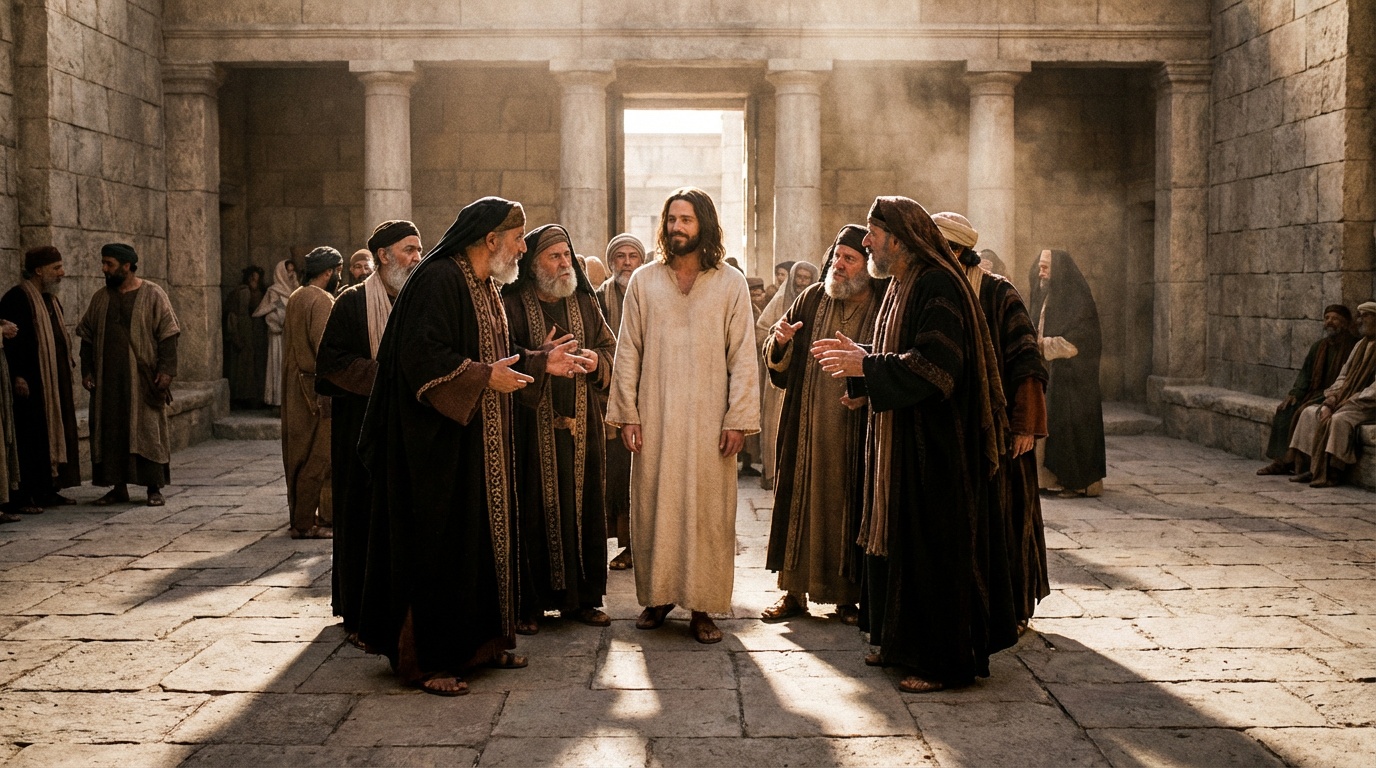
Jesus said to the Pharisees: "I am going away and you will look for me, but you will die in your sin. Where I am going you cannot come." So the Jews said, "He is not going to kill himself, is he, because he said, 'Where I am going you cannot come'?" He said to them, "You belong to what is below, I belong to what is above. You belong to this world, but I do not belong to this world. That is why I told you that you will die in your sins. For if you do not believe that I AM, you will die in your sins." — John 8:21-30
In John 8:21-30, Jesus makes one of Scripture's most profound declarations of divine identity. The phrase "I AM" echoes God's revelation to Moses at the burning bush, when the Almighty declared His name as "I AM WHO AM." Christ's words pierce through religious pretense to reveal the essential choice before every human heart.
The Divine Declaration: Understanding "I AM"
When Jesus declares "I AM" to the Pharisees, He claims nothing less than divine identity. This sacred name, reserved for God alone in Hebrew tradition, marks a turning point in the Gospel narrative. The Pharisees understood the implications perfectly—such a claim meant either blasphemy or the presence of the living God among them.
The Church Fathers recognized this moment as a theophany, a manifestation of God's glory in human form. Saint John Chrysostom noted that Christ's use of the divine name reveals His eternal existence and unity with the Father. This declaration transforms how we understand Jesus's ministry and mission.
Two Realms: Heaven and Earth in Tension
Christ draws a sharp distinction between "what is above" and "what is below." This contrast illuminates the fundamental difference between divine and earthly perspectives. The Pharisees, rooted in worldly concerns and human traditions, cannot comprehend the heavenly reality Jesus embodies.
This tension between realms calls every believer to examination. Do we approach faith with earthly calculations or heavenly trust? Saint Teresa of Avila understood this divide when she spoke of the soul's journey from the earthly mansion to divine union. Our prayer life becomes the bridge between these realms.
The Consequences of Unbelief
Jesus warns that those who reject His divine identity "will die in your sins." This stark pronouncement reveals the eternal consequences of our response to Christ. Sin, in this context, represents not merely moral failure but fundamental separation from God's life.
The saints understood that sin's greatest tragedy lies not in breaking rules but in breaking relationship with the Divine. When we refuse to recognize Jesus as "I AM," we choose separation over communion, death over life.
Faith's Response to Divine Revelation
The passage concludes with hope: "Because he spoke this way, many came to believe in him." Faith emerges not from human reasoning but from encountering the living God in Christ. The same words that hardened some hearts opened others to divine grace.
This dynamic of revelation and response continues in our prayer life. Through contemplative practices like Ignatian Contemplation, we position ourselves to receive Christ's self-revelation. The Gospel becomes not mere historical record but living encounter with the "I AM" who dwells among us.
Pray With This Reading
This passage invites deep contemplation of Christ's divine identity. Consider approaching it through St. John of the Cross Method, which emphasizes stripping away earthly attachments to encounter the Divine. Allow Jesus's words "I AM" to resonate in the silence of your heart, recognizing His presence transcends all human categories and expectations.
Frequently Asked Questions
What does "I AM" mean in John 8:28?
"I AM" refers to the divine name God revealed to Moses in Exodus 3:14. When Jesus uses this phrase, He claims divine identity and eternal existence, asserting His unity with the Father and His role as the source of all being.
Why did the Pharisees not understand Jesus was speaking of the Father?
The Pharisees' earthly perspective prevented them from recognizing spiritual truth. Their focus on religious tradition and worldly power blinded them to the divine reality present in Christ. Understanding requires faith, not merely intellectual knowledge.
How can we avoid "dying in our sins" according to this passage?
Jesus teaches that believing in His divine identity as "I AM" is essential for salvation. This belief involves more than intellectual assent—it requires surrendering to Christ's lordship and allowing His divine life to transform our earthly existence.