
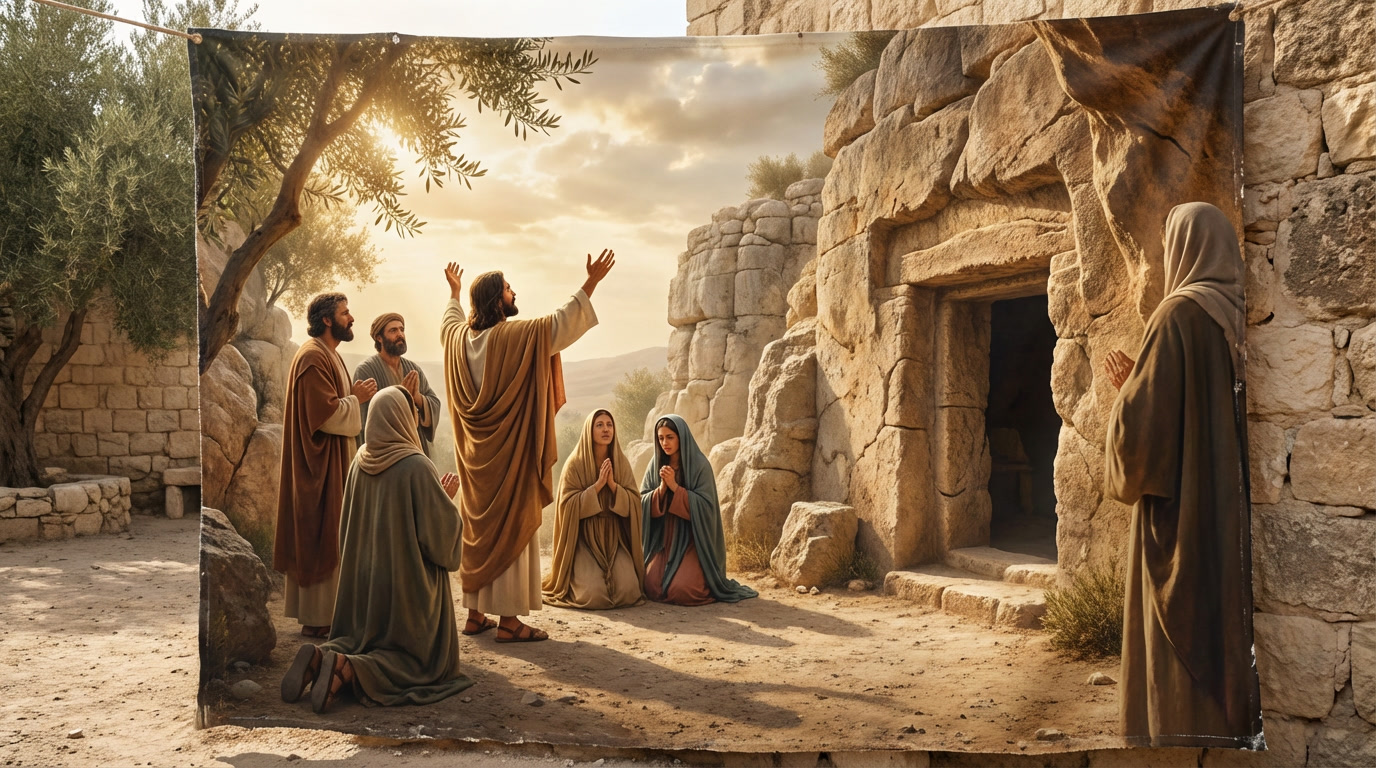
Now a man was ill, Lazarus from Bethany, the village of Mary and her sister Martha. Mary was the one who had anointed the Lord with perfumed oil and dried his feet with her hair; it was her brother Lazarus who was ill. So the sisters sent word to him saying, "Master, the one you love is ill." When Jesus heard this he said, "This illness is not to end in death, but is for the glory of God, that the Son of God may be glorified through it." — John 11:1-4
The raising of Lazarus stands as one of the most profound signs in John's Gospel. This narrative reveals the heart of Jesus Christ—his love for his friends, his divine timing, and his power over death itself. As we prepare for Holy Week, this Gospel passage invites us to examine our own faith in the resurrection.
Divine Timing and Human Waiting
Jesus receives urgent news about Lazarus yet remains where he is for two more days. This delay troubles many readers. Why would the Lord of love tarry when his beloved friend lies dying?
The answer lies in divine providence. Jesus knows the Father's will transcends human urgency. Sometimes God's timing appears cruel to our limited understanding. Yet Christ's delay serves a greater purpose—not merely healing the sick, but revealing resurrection power to those who witness.
Martha and Mary experience the agony of waiting. Their message to Jesus carries both faith and desperation: "Master, the one you love is ill." They trust in his love while wrestling with his apparent absence. This tension between faith and human suffering marks the spiritual life.
Martha's Declaration of Faith
When Jesus finally arrives, Martha meets him with both grief and faith. Her words echo through the centuries: "I know that whatever you ask of God, God will give you." Here stands a woman who has wrestled with disappointment yet clings to divine possibility.
Christ reveals himself to her: "I am the resurrection and the life." This declaration reaches beyond Lazarus to every soul facing death—physical, spiritual, or emotional. Martha responds with the Church's great confession: "I have come to believe that you are the Christ, the Son of God."
Her faith transcends circumstances. Even in grief, she recognizes Jesus as the source of life itself. This recognition becomes the foundation of Christian hope.
Jesus Weeps: The Compassion of God
The shortest verse in Scripture carries infinite weight: "Jesus wept." The Son of God enters fully into human sorrow. He does not stand distant from our pain but joins us in it.
Some question why Jesus weeps if he knows he will raise Lazarus. The tears reveal the depth of divine love. God does not merely fix our problems; he suffers alongside us. These tears sanctify every moment of human grief.
The crowd observes: "See how he loved him." Love, not power, motivates the miracle that follows. This love extends to every person facing loss, offering not just hope for resurrection but companionship in sorrow.
The Call from the Tomb
"Lazarus, come out!" The voice that spoke creation into being now calls life from death. Lazarus emerges, bound in burial cloths—alive but not yet free. Jesus commands: "Untie him and let him go."
This image speaks to every Christian life. We are called from death to life, yet we often remain bound by old patterns, fears, and limitations. The community must help unbind what God has made alive. Resurrection requires both divine power and human cooperation.
The miracle points beyond itself to Christ's own death and resurrection. Lazarus will die again, but Jesus conquers death eternally. This sign prepares the disciples for the ultimate victory over death at Easter.
Pray With This Reading
This profound Gospel passage invites deep contemplation through Ignatian Contemplation. Place yourself at the tomb with Martha, Mary, and the gathered crowd. Feel the weight of grief, the confusion at Jesus' delay, and the explosion of joy at Lazarus' emergence.
Allow yourself to hear Christ's voice calling your name, summoning you from whatever death you may be experiencing—despair, sin, or spiritual dryness. What burial cloths need to be unbound in your life?
What does Jesus mean when he says "I am the resurrection and the life"?
Jesus declares himself as the source of both resurrection power and eternal life. He offers not just future hope but present transformation. Those who believe in him possess life even in the face of physical death. This statement reveals Jesus' divine identity as the giver of life itself.
Why did Jesus wait two days before going to Lazarus?
Jesus' delay serves God's greater glory. Had he arrived earlier to heal Lazarus, people might have seen only another healing miracle. By raising Lazarus from the dead after four days, Jesus reveals his power over death itself, preparing witnesses for his own resurrection. Divine timing serves purposes beyond human understanding.
What can we learn from Martha's response to Jesus?
Martha models faith that persists through disappointment. She approaches Jesus with both grief and trust, expressing her pain while maintaining belief in his power. Her confession of faith—"I believe that you are the Christ, the Son of God"—becomes the foundation of Christian faith. She teaches us to bring our whole selves, including our doubts and sorrows, to Christ.