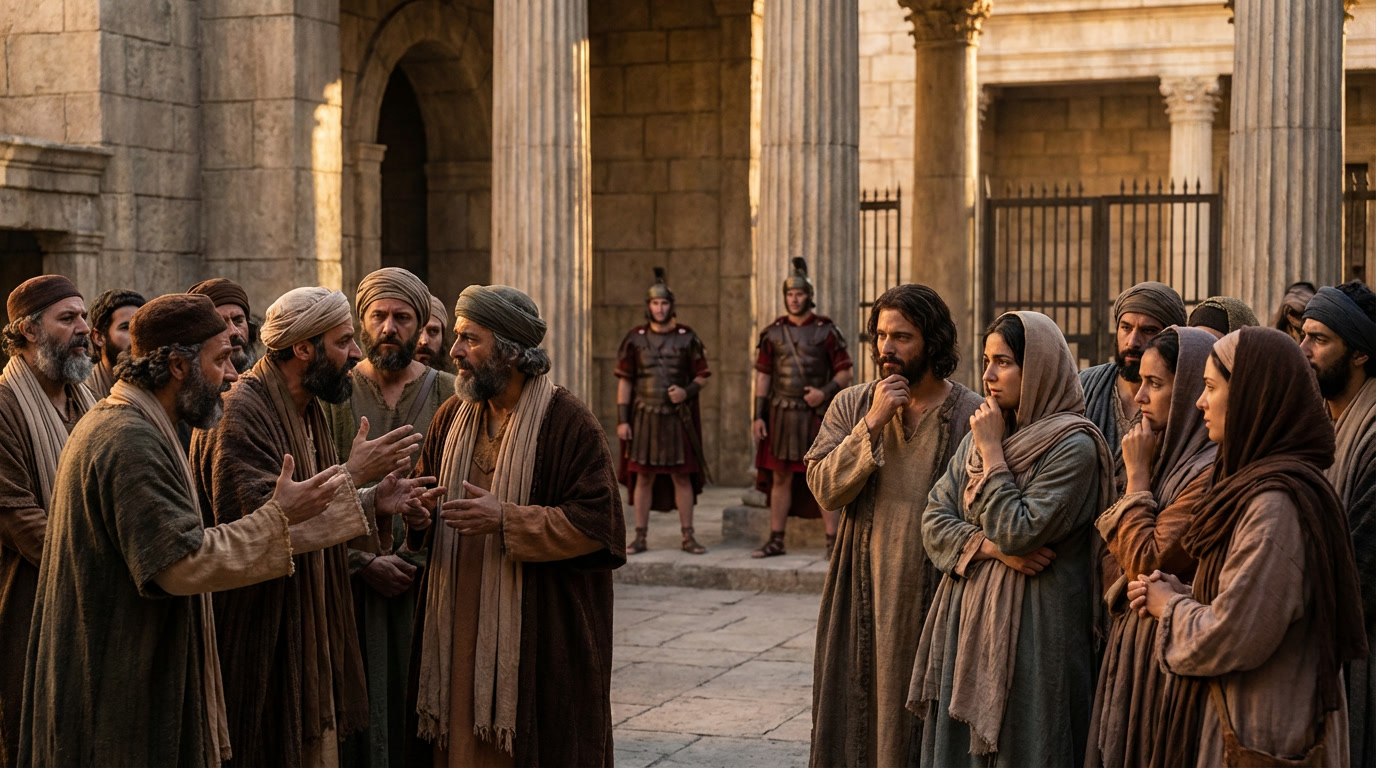
Some in the crowd who heard these words of Jesus said, "This is truly the Prophet." Others said, "This is the Christ." But others said, "The Christ will not come from Galilee, will he? Does not Scripture say that the Christ will be of David's family and come from Bethlehem, the village where David lived?" So a division occurred in the crowd because of him. Some of them even wanted to arrest him, but no one laid hands on him. So the guards went to the chief priests and Pharisees, who asked them, "Why did you not bring him?" The guards answered, "Never before has anyone spoken like this man." So the Pharisees answered them, "Have you also been deceived? Have any of the authorities or the Pharisees believed in him? But this crowd, which does not know the law, is accursed." Nicodemus, one of their members who had come to him earlier, said to them, "Does our law condemn a man before it first hears him and finds out what he is doing?" They answered and said to him, "You are not from Galilee also, are you? Look and see that no prophet arises from Galilee." Then each went to his own house.John 7:40-53
The crowd fractures before Christ. Some recognize the Prophet. Others see the Messiah. Still others dismiss Him entirely based on geography and preconceptions. This scene from John's Gospel reveals how truth itself can become a source of division, even among those seeking God.
The Authority That Moves Hearts
The temple guards return empty-handed. Their explanation cuts through religious politics: "Never before has anyone spoken like this man." These men, trained to arrest troublemakers, find themselves unable to act. Christ's words carry an authority that transcends human power structures.
The guards recognize something the religious leaders miss. Authority flows not from position or credential, but from truth itself. When God speaks, even those sent to silence Him pause in recognition. The Spirit moves in unexpected ways, touching hearts that remain open to wonder.
Knowledge Versus Understanding
The Pharisees mock the crowd's lack of legal knowledge. Yet their scholarship blinds them to the very One their Scriptures promised. They know that the Messiah comes from Bethlehem - and Jesus did. They know He descends from David - and Jesus does. Their facts are correct, but their understanding fails.
True wisdom requires more than accumulated knowledge. It demands the humility to let God surprise us. The learned can become prisoners of their own certainty, while the simple-hearted remain free to encounter the divine in unexpected forms. Saint John of the Cross understood this paradox of spiritual blindness that comes from too much light rejected.
Nicodemus Speaks Truth to Power
In this charged atmosphere, Nicodemus rises. The Pharisee who once came to Jesus under cover of darkness now risks his reputation for justice. His question pierces religious prejudice: "Does our law condemn a man before it first hears him?"
Nicodemus embodies the slow work of grace. His earlier nighttime visit to Jesus planted seeds that now bear fruit in courage. He does not yet publicly declare faith, but he defends fairness. Sometimes discipleship begins with simple justice, with refusing to let fear silence what conscience knows is right.
The Division That Reveals Hearts
Christ promised to bring not peace but a sword. This passage shows that sword at work. Families divide. Religious communities fracture. Even the crowd splits along lines of recognition and rejection. The presence of truth forces choices that comfortable neutrality cannot avoid.
Division itself is not the goal - unity in truth is. But false unity built on compromise cannot withstand the light of Christ. Sometimes the path to genuine peace requires passing through the valley of honest disagreement. The saints understood this cost of following Jesus beyond conventional wisdom.
Pray With This Reading
This passage invites us into honest self-examination about our own recognition of Christ. Lectio Divina offers a perfect approach to this Gospel reading. Allow the text to reveal where preconceptions might cloud your vision of Jesus, and where His authority challenges comfortable assumptions.
Frequently Asked Questions
Why did the crowds have different opinions about Jesus?
People interpreted Jesus through their existing knowledge and expectations. Some recognized His prophetic authority, others His messianic identity, while others let geographical prejudice blind them to both possibilities. Truth often appears differently depending on the heart's readiness to receive it.
What does this passage teach about religious authority?
The passage contrasts human religious authority with divine authority. The guards recognized something in Jesus that transcended institutional power, while the religious leaders relied on position rather than openness to God's surprising ways of working.
How does Nicodemus show courage in this passage?
Nicodemus risks his standing with fellow Pharisees by defending basic justice for Jesus. Though not yet a full declaration of faith, his intervention shows how grace works gradually, moving believers from secret admiration to public defense of truth.