
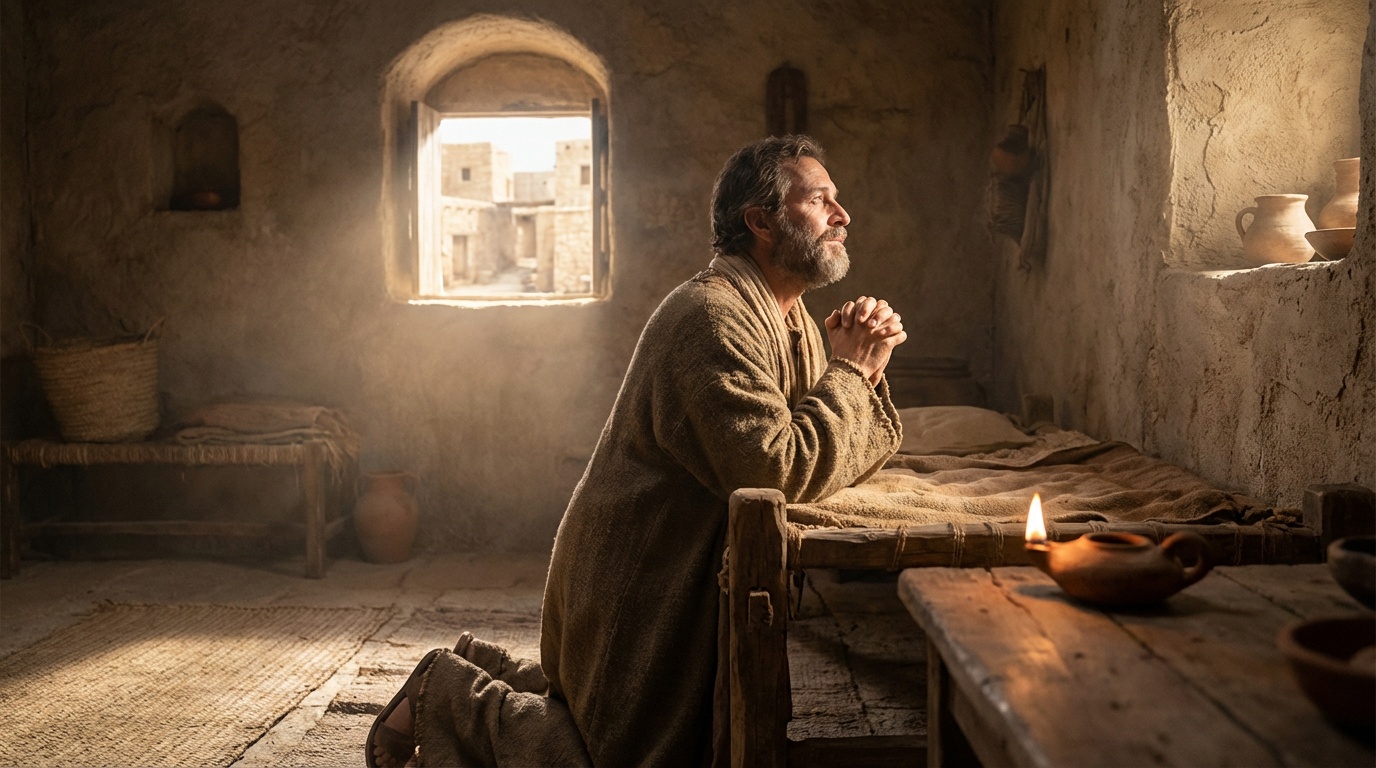
Jacob was the father of Joseph, the husband of Mary. Of her was born Jesus who is called the Christ. Now this is how the birth of Jesus Christ came about. When his mother Mary was betrothed to Joseph, but before they lived together, she was found with child through the Holy Spirit. Joseph her husband, since he was a righteous man, yet unwilling to expose her to shame, decided to divorce her quietly. Such was his intention when, behold, the angel of the Lord appeared to him in a dream and said, "Joseph, son of David, do not be afraid to take Mary your wife into your home. For it is through the Holy Spirit that this child has been conceived in her. She will bear a son and you are to name him Jesus, because he will save his people from their sins." When Joseph awoke, he did as the angel of the Lord had commanded him and took his wife into his home.— Matthew 1:16, 18-21, 24a
Saint Joseph stands at the threshold of salvation history, facing a crisis that would test the depths of his faith. The Gospel reveals a man caught between human understanding and divine mystery, called to participate in God's plan through radical trust. His response offers profound lessons about righteousness, obedience, and surrendering our plans to God's will.
The Righteous Man's Dilemma
Scripture calls Joseph "righteous," a term that carries weight in Jewish tradition. Righteousness encompasses both legal observance and moral integrity. Joseph faced an impossible situation: his betrothed was with child, yet he knew the child was not his.
The Law of Moses prescribed severe consequences for adultery. Yet Joseph chose compassion over strict justice. His decision to "divorce her quietly" reveals a man who balanced legal requirements with mercy. This tension between law and love foreshadows the very mission of the child Mary carries.
Joseph's initial plan demonstrates wisdom and kindness. He sought to protect Mary from public shame while remaining faithful to his understanding of righteousness. This internal struggle reveals the cost of discipleship—sometimes God's will appears to contradict our deepest convictions.
Divine Intervention Through Dreams
God speaks to Joseph through dreams, a pattern that will continue throughout the infancy narratives. Dreams in Scripture often herald divine intervention in human affairs. The angel's message transforms Joseph's understanding of the situation entirely.
"Do not be afraid" echoes throughout salvation history whenever God calls someone to participate in His plan. Joseph's fear was natural—taking Mary as his wife meant accepting responsibility for a child conceived by the Holy Spirit. The angel's words address both his immediate concern and his deeper calling.
The name "Jesus" carries profound meaning: "he will save his people from their sins." Joseph receives not just instructions but revelation about the child's mission. This divine insight transforms his role from reluctant protector to conscious collaborator in God's salvific plan.
Obedience Without Understanding
Joseph's response demonstrates perfect obedience: "he did as the angel of the Lord had commanded him." No questions, no negotiations, no requests for additional signs. This immediate compliance reveals mature faith that trusts God's word completely.
The text emphasizes action over emotion. Joseph doesn't debate the theological implications or demand fuller explanations. He simply obeys. This pattern of faithful response makes him a model for all who struggle to understand God's will in their lives.
His obedience requires tremendous courage. Taking Mary as his wife meant accepting social scrutiny and potential misunderstanding. Yet Joseph chooses God's plan over social approval, demonstrating the priority of divine will over human opinion.
Through Ignatian Contemplation, we can place ourselves in Joseph's position, experiencing his internal conflict and ultimate surrender to God's mysterious ways.
The Silent Saint's Legacy
Joseph speaks no recorded words in Scripture, yet his actions speak volumes. His righteousness combines justice with mercy, law with love, understanding with acceptance. The Church honors him as patron of fathers, workers, and the universal Church precisely because of these qualities.
His willingness to step into God's plan without full comprehension offers hope for all who face unclear vocations or difficult decisions. Joseph shows us that holiness often requires acting on faith rather than waiting for complete understanding.
The genealogy that opens this passage places Joseph in the line of David, connecting Jesus to messianic promises. Yet Joseph's true greatness lies not in his ancestry but in his response to grace.
Pray With This Reading
This Gospel passage invites deep contemplation of God's call to trust beyond understanding. Consider using Surrender Prayer to reflect on areas of your life where, like Joseph, you may need to release your plans to embrace God's will. Ask Saint Joseph to intercede for the grace to respond with his same prompt obedience and unwavering trust.
Frequently Asked Questions
What does it mean that Joseph was "righteous" in the Gospel?
Joseph's righteousness encompasses both legal observance of Jewish law and moral integrity. Despite having grounds for public accusation, he chose mercy over strict justice, planning to divorce Mary quietly to protect her from shame while remaining faithful to the law.
Why did God speak to Joseph through dreams?
Dreams were a recognized means of divine communication in Jewish tradition. God used this familiar method to reach Joseph, revealing the divine origin of Mary's pregnancy and His plan for salvation. The dream format emphasizes the supernatural nature of the revelation.
How does Joseph's obedience serve as a model for Christians?
Joseph demonstrates immediate, complete obedience without demanding additional explanations or signs. His response shows mature faith that trusts God's word entirely, offering a model for accepting God's will even when it challenges our understanding or plans.